Fields Marked With An “*” Are Required

Available 24/7 480-400-5555
Phoenix Fraud Lawyer

Fraud Attorney in Phoenix, AZ
A fraud charge can stem from a wide variety of situations. A person may be accused of handling personal affairs in an untruthful manner or engaging in business practices that are false. Allegations could also involve using another’s identity or lying on an official document. Many people may find themselves caught in the net of an investigation and face charges even if they were not involved in the fraud, requiring the help of a Phoenix fraud lawyer.
Regardless of the specifics, fraud charges are serious and require a strong criminal defense to protect your rights. These allegations can put your future at risk if you do not properly contest them with help from a dedicated criminal defense lawyer in Phoenix. At the Grand Canyon Law Group, a Phoenix fraud lawyer knows how to challenge the prosecutor’s case and defend your way of life.
LEGAL DEFINITION OF FRAUD
Most fraud charges allege that a person has benefited from a knowing misrepresentation. A knowing misrepresentation can be a lie or a bent truth. Fraud may also occur from a material omission, meaning the person knowingly failed to mention important information to gain some benefit.
Fraud charges often revolve around money but could also involve services, power, or position, government benefits, or anything else that may benefit the individual. Arizona Revised Statutes § 13-2310 also states that another person does not have to rely on the false statement for the offense to occur. This means even a failed attempt to deceive someone can still be considered fraud in Phoenix, AZ.
COMMON TYPES OF FRAUD CASES IN PHOENIX
Some types of fraud are considered white-collar crimes and often occur in a business context. If you are dealing with such crimes, contact our skilled Phoenix white-collar crime lawyer.
Others occur when individuals seek benefits for themselves. Types of fraud cases that our local attorneys commonly handle include, but are not limited to:
- Bank fraud
- Welfare and public benefits fraud
- Theft or embezzlement
- Real estate fraud
- Tax fraud
- Government benefits fraud
- Mortgage fraud
- Mail fraud
These and many other allegations of dishonesty may result in a fraud charge under state law. In every case, the defendant needs strong representation from an experienced fraud attorney in the area.
PENALTIES FOR FRAUD OFFENSES
There are many types of fraudulent offenses, each of which could be subject to different penalties. Fraud offenses under ARS § 13-2310 are considered a Class Two felony, accompanied by severe penalties. If convicted, a person with no prior criminal record could face a prison sentence of anywhere between three years and twelve and a half years.
For a person with prior convictions, the penalties could increase under local fraud laws. A person could be labeled a repetitive offender, classified as category one, two, or three, under ARS § 13-703. The penalty ranges for the applicable felony increase significantly for each higher category. As such, it is crucial to work with a relentless fraud attorney at our Phoenix office to refute every charge and mitigate the potential penalties.
REASONS TO HIRE A FRAUD LAWYER
Arizona is one of the top states for online scams, with local residents losing an estimated $2.8 billion per year. This covers only the losses from one particular form of fraud. If you consider the financial implications of all forms of fraud and white-collar crime, the Arizona economy suffers many billions of dollars per year in losses.
No matter what type of fraud you’ve been accused of committing, you need to hire a fraud lawyer who can help you protect your rights in court and defend against the charges. Your lawyer can:
- Explain the nature of the charges you’re facing
- Collect evidence that can help in your defense
- Come up with an effective defense strategy
- Look for issues with the prosecution’s case
- Identify constitutional rights violations
- Help you negotiate a plea deal if you choose to do so
Hiring a lawyer is the most effective way to help yourself obtain a successful outcome for your fraud case.
FAQS ABOUT FRAUD
What Is the Fraud Law in Arizona?
The fraud law in Arizona governing fraudulent schemes and artifices is ARS 13-2310. Consumer fraud protections are offered under the Arizona Consumer Fraud Act, ARS 44-1521. These laws prohibit deception, false promises, misrepresentation, and concealment of material facts in business dealings and sales or advertising, respectively. Violations are investigated by the Attorney General’s Office.
What Evidence Is Needed for Reporting Fraud?
Concrete evidence is needed for reporting fraud in Arizona, including the suspect’s identifying information and proof of their dishonest act. Evidence often includes emails, contracts, receipts, and bank records. It must demonstrate that the suspect made a material false statement with the knowledge that it was false and the intent to deceive you or another person, resulting in financial damage.
What Legally Counts as Fraud in Arizona?
Acts that legally count as fraud in Arizona include knowingly benefiting from schemes or artifice intended to defraud another person or business. Fraud uses false pretenses, representations, promises, or material omissions. It often involves schemes that deprive people of property or services. Fraudulent acts are generally covered under ARS 13-2310.
What Is the Statute of Limitations for Fraud in Arizona?
The statute of limitations for fraud in Arizona is usually three years from the discovery of the fraud. However, there is an exception. Claims brought under the Arizona Consumer Fraud Act must be filed within one year. Securities fraud also has a different statute of limitations. Charges must be filed within two years of the discovery of securities fraud.
What Are Some Common Types of Consumer Fraud?
Some common types of consumer fraud include imposter scams, phishing, and online shopping fraud. Identity theft, investment schemes, fake charities, and debt relief scams are all relatively common, as well. In these schemes, the perpetrators often use phone calls, emails, or fake websites to target victims, who stand to lose considerable amounts of money if they fall prey to the scams.
DEFEND YOUR RIGHTS WITH A FRAUD LAWYER IN PHOENIX
Fraud charges may result in life-changing penalties, and you could be facing years in prison. To avoid a conviction and work toward an ideal result, you need experienced legal counsel who knows how to properly defend your fraud case.
At the Grand Canyon Law Group, our defense attorneys are former prosecutors who understand how to contest the charges against you and defend your way of life. Our team has years of experience in defending clients against fraud charges and other white-collar crimes. For assistance, speak with a Phoenix fraud attorney right away. Contact us today to get started on your case.
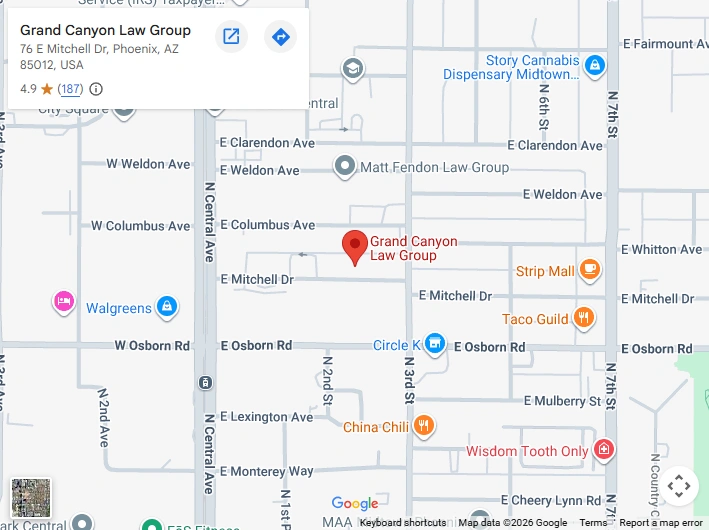
Grand Canyon Law Group – Phoenix, AZ Office

Schedule A Consultation With The Grand Canyon Attorney Who Can Help
Phoenix Office
76 E Mitchell Drive
Phoenix, AZ 85012
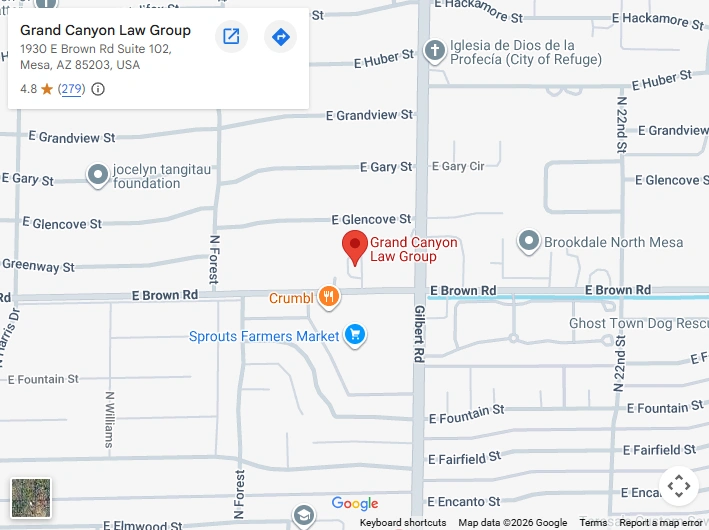
Mesa Office
1930 E. Brown Rd
STE 102
Mesa, AZ 85203
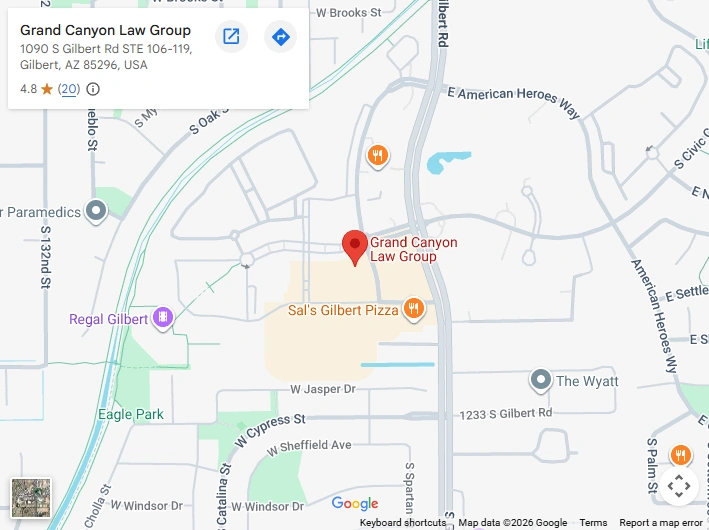
Gilbert Office
1090 S. Gilbert Rd
STE 106-119
Gilbert, AZ 85296
Tucson Office
1 South Church Avenue,
#1200
Tucson, AZ 85701
© Copyright 2026 Grand Canyon Law Group. All rights reserved.
*Images are obtained under license from Canva and other third-party stock image providers, with attribution included where required.