Fields Marked With An “*” Are Required

Available 24/7 480-400-5555
Phoenix Disorderly Conduct Lawyer

Disorderly Conduct Attorney in Phoenix, AZ
Being charged with any crime can cause major disruption to your life, as allegations alone might impact job opportunities, housing, your social life, and your reputation. All of these effects are magnified if you are convicted. Disorderly conduct, while a somewhat obscure criminal charge, is a criminal charge nonetheless. You can take the first step toward defending your rights and protecting your reputation by contacting a Phoenix disorderly conduct lawyer.
Grand Canyon Law Group – Your Phoenix Criminal Defense Attorneys
When you need a seasoned Phoenix criminal defense lawyer to help you navigate criminal charges against you, Grand Canyon Law Group should be your first call. We are a dedicated law firm bringing decades of combined experience to the table for our clients. We know that when our clients come to us, they are facing some of the most stressful and uncertain times in their lives, and we approach each case with the care and empathy our clients deserve.
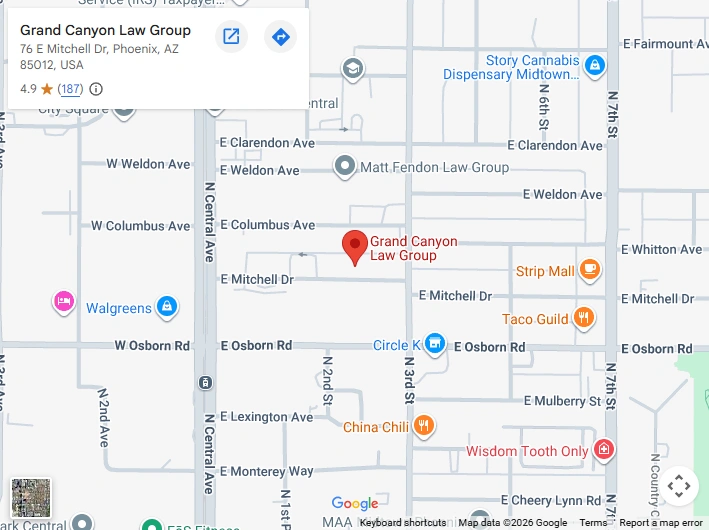
As criminal defense attorneys, we understand that legal emergencies do not take time off. That is why we make ourselves available to our clients 24 hours per day, seven days per week. If you need us at any time of the day or night, we are always a phone call away. Our Phoenix office, located at 76 East Mitchell Drive, is convenient for our Phoenix-area clients to stop in for meetings or to ask questions.
We are uniquely positioned to help clients facing criminal charges because some of our attorneys have experience as prosecutors, which gives them the knowledge it takes to anticipate the moves a prosecutor may make. Understanding how the process works from the other side allows our attorneys to stay one step ahead regarding their defense strategy.
What Is Disorderly Conduct?
According to Arizona law, disorderly conduct is defined as acting in such a way that is intended to disturb the peace in a neighborhood setting or the peace of a family or individual person or acting in such a way that does, in fact, disturb the peace, even if that was not the primary intention. In 2025, there were 822 disorderly conduct cases filed in Maricopa County. Some actions that can be considered disorderly conduct include the following:
- Fighting or acting violently
- Being unreasonably loud
- Using abusive language or gesturing at a person in such a way as to provoke physical violence
- Being loud or obstructive to prevent the normal operation of a business or the normal procession of an event or gathering
- Disobeying an order to disperse
- Recklessly brandishing, handling, or discharging a weapon or other deadly instrument.
What Are the Potential Penalties for Disorderly Conduct?
In most cases, disorderly conduct is a misdemeanor. However, if the offense involved a weapon or other deadly instrument, it can be charged as a Class 6 felony instead. Misdemeanor charges are less serious than felonies, and they are only punishable by up to one year in prison. Felony charges, on the other hand, are punishable by more than a year in prison and generally carry harsher penalties.
According to sentencing guidelines in Arizona law, the maximum prison sentence for a Class 1 misdemeanor, which applies to most disorderly conduct charges, is six months. A judge may also impose fines, probation, or community service as punishments, either on their own or in addition to jail time.
Why You Should Hire a Disorderly Conduct Lawyer
Any time you are facing criminal charges, it is a good idea to secure legal representation as soon as possible. If you are being charged with disorderly conduct, you should hire a disorderly conduct lawyer at your earliest convenience. Your attorney can help you from the very beginning of your case by gathering information to build your defense and watching for any mishandling of your case on the part of law enforcement officers.
When law enforcement officers are investigating a potential crime, they are required to follow strict procedures to procure evidence and conduct searches. When they break these rules, it can result in violations of a defendant’s rights, which may lead to dismissal of the entire case. A seasoned criminal defense attorney can watch for any such violations and address them if they arise.
Bringing an attorney on board early on in your case also helps your defense by giving the lawyer more time to review any materials the prosecution might possess. Laws that govern the criminal justice process require that defense attorneys be given access to any evidence the prosecution has. This protects the rights of defendants by giving their attorneys a chance to adequately review and respond to anything the prosecution presents.
What Defenses Might a Lawyer Use Against Disorderly Conduct Charges?
In any criminal defense strategy, if the defendant is innocent, the goal is to demonstrate that innocence or refute the prosecution’s allegations against them. If the defendant committed the offense in question, but there are factors that either justify or explain their behavior, the defense may focus on why the defendant did what they did. Some potential defenses against disorderly conduct charges include the following:
- Mistaken identity: Unfortunately, it sometimes happens that law enforcement or other individuals make mistakes when identifying who is responsible for a crime. If you are accused of disorderly conduct, but you are not responsible for the actions in question, your attorney may attempt to demonstrate that fact.
- Free speech: Sometimes, disorderly conduct charges can be challenged by asserting that the defendant was exercising their right to free speech within reason.
- Unintentional conduct: Intention is at the core of disorderly conduct charges. For a person to be charged with disorderly conduct, the disruption must be intentional, so an attorney may argue that the defendant did not intend to be disruptive or did not know that their conduct was disruptive.
- Insufficient evidence: Any time a person faces criminal charges in the American justice system, the burden of proof rests with the prosecution. This means that in order to convict a defendant, the prosecuting attorney must demonstrate that the defendant committed the offense in question beyond a reasonable doubt. If the evidence is insufficient to prove the defendant’s guilt, their defense attorney may focus on that insufficiency.
This is not an exhaustive list of potential defenses against disorderly conduct charges. Each case is unique. That is why it is so important to hire a competent attorney who can assess your legal position and respond accordingly.
FAQs
Do Prior Convictions Affect Sentencing for Disorderly Conduct?
Yes, prior convictions can affect sentencing for disorderly conduct. As it is with virtually every other criminal charge, a judge may consider a defendant’s prior record while deciding whether to be lenient or harsh when handing down a sentence. Prior convictions may result in longer prison sentences or may disqualify a defendant from alternative punishments like probation.
How Much Does It Cost to Hire a Disorderly Conduct Attorney in Phoenix?
It’s difficult to predict how much it might cost to hire a disorderly conduct attorney in Phoenix. Lawyers set their own hourly rates and fee structures, and costs can vary based on how complex a case is and how much time a lawyer needs to spend working on it. Most lawyers require an up-front payment called a retainer to begin working. After you pay the retainer, the attorney bills their hours against it for the duration of the case.
Can I Be Charged With Disorderly Conduct if My Neighbor Files a Noise Complaint?
Technically, you could be charged with disorderly conduct following a noise complaint from a neighbor, but this is not a common situation. To get a disorderly conduct charge following a noise complaint, a police officer would have to determine that your actions amounted to disorderly conduct under the law, and they would have to believe that the disruption was intentional.
Is There a Minimum Prison Sentence for Disorderly Conduct in Phoenix?
No, there is no mandatory minimum prison sentence for disorderly conduct in Phoenix. Misdemeanor disorderly conduct can result in prison sentences that last up to one year. For felony disorderly conduct, a judge may decide to impose a prison sentence longer than one year, depending on the circumstances of the offense. The bottom line is that disorderly conduct can result in a prison stint, but it is not mandatory.
Is There a Statute of Limitations for Disorderly Conduct in Arizona?
Yes, there is a statute of limitations for disorderly conduct charges under Arizona law. Because disorderly conduct is a criminal offense, the general statutes of limitations for misdemeanors and felonies apply. For misdemeanor disorderly conduct, the statute of limitations is one year. For felony charges, the statute of limitations is seven years.
Contact A Phoenix Disorderly Conduct Lawyer At Grand Canyon Law Group Today
When you are facing criminal charges, your entire life could be on the line. In that situation, you need an experienced, competent, and confident attorney to help you defend your rights and protect your reputation and your future. Contact Grand Canyon Law Group today to tell us about your needs and find out what we can do for you.

Schedule A Consultation With The Grand Canyon Attorney Who Can Help
Phoenix Office
76 E Mitchell Drive
Phoenix, AZ 85012
Mesa Office
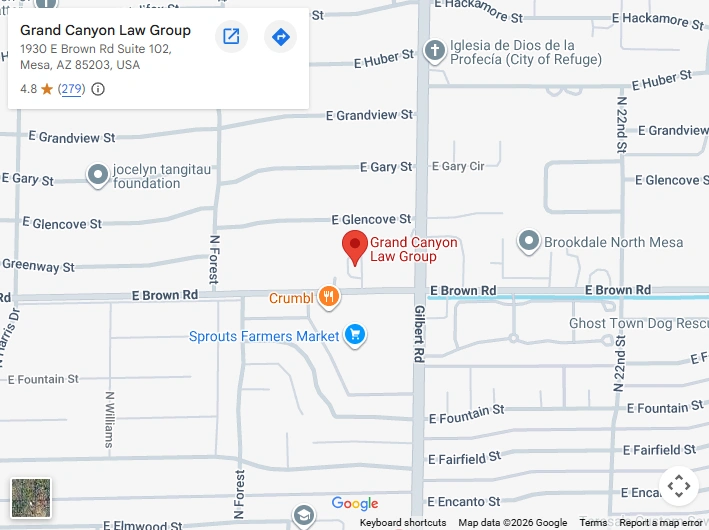
1930 E. Brown Rd
STE 102
Mesa, AZ 85203
Gilbert Office
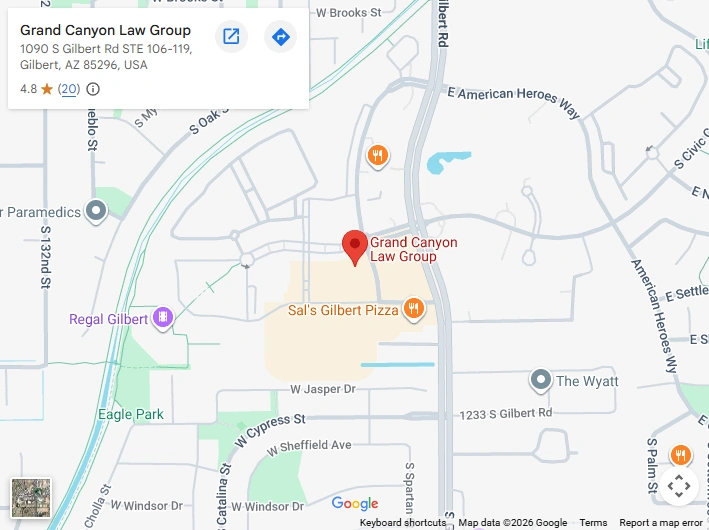
1090 S. Gilbert Rd
STE 106-119
Gilbert, AZ 85296
Tucson Office
1 South Church Avenue,
#1200
Tucson, AZ 85701
© Copyright 2026 Grand Canyon Law Group. All rights reserved.
*Images are obtained under license from Canva and other third-party stock image providers, with attribution included where required.