Fields Marked With An “*” Are Required

Available 24/7 480-400-5555
Phoenix Resisting Arrest Lawyer

Resisting Arrest Attorney in Phoenix, AZ
Law enforcement officers dedicate their lives to keeping the public safe. Sometimes, that involves making arrests. To protect law enforcement officers and help support public peace, it is a criminal offense to resist arrest. If you have been charged with this particular offense, you need the help of an experienced Phoenix resisting arrest lawyer as you navigate the justice process and attempt to preserve your rights and safeguard your future.
About Grand Canyon Law Group – Your Phoenix Criminal Defense Attorneys
Any criminal charges against you can result in serious consequences, some of which may be far-reaching and long-lasting in your life. You could face jail time, fines, or probation, in addition to reputational damage and possible work- or housing-related consequences of having a criminal record. When the stakes are high, turn to an experienced Phoenix criminal defense lawyer from Grand Canyon Law Group.
We are a dedicated firm with several decades of combined experience. Some of our attorneys are former prosecutors, which gives them unique knowledge and insight regarding criminal defense. We know that our clients come to us during some of the most difficult moments of their lives, and we pride ourselves on approaching each case with compassion and honesty. We tirelessly advocate for our clients to pursue favorable results.
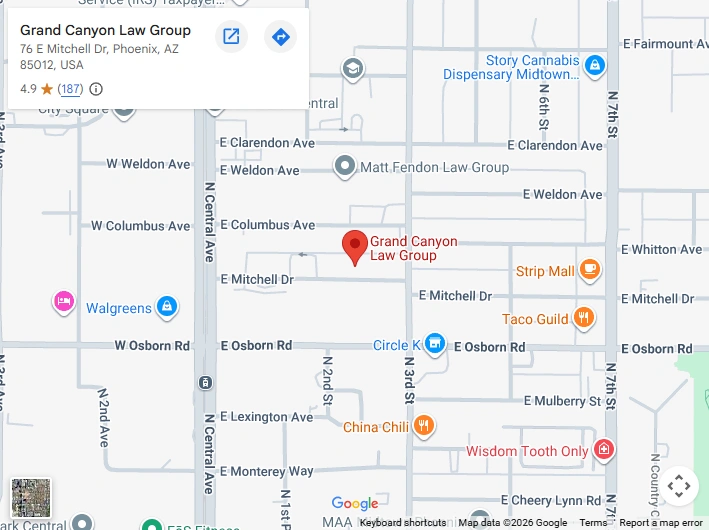
When you choose Grand Canyon Law Group, you get 24-hour access to your legal counsel. Legal needs do not wait for convenient times to arise, so we make ourselves available for our clients no matter the time of day or night. Our Phoenix, situated at 76 East Mitchell Drive, is conveniently located for our Phoenix clients to stop by to ask questions or come in for meetings. We are also always available for our clients by phone.
What Is Resisting Arrest?
In 2025 in Maricopa County, there were 816 reported instances of resisting arrest. The definition of resisting arrest is rather self-explanatory. If a police officer is attempting to arrest someone, and that person tries to resist the officer’s attempts to arrest them, that constitutes resisting arrest.
The job that police officers do is a dangerous one. In the course of their work, they constantly face threats of bodily harm. Making resisting arrest a crime is a measure that governments take to protect police officers and deter violence against them. In Arizona, the law defines three levels of resisting arrest. They are as follows:
- Resisting arrest by using force or threatening to use force against a police officer or any other person
- Resisting arrest through any means that creates a risk of physical harm to a police officer
- Resisting arrest through passive means, such as refusing to move
All of these actions can result in criminal resisting arrest charges, but the first two scenarios constitute Class 6 felonies, whereas passive resistance is a Class 1 misdemeanor.
Potential Consequences of Resisting Arrest
If you are convicted of resisting arrest, you could face jail time, fines, probation, community service, or any other reasonable sentence a judge sees fit to hand down. There is no mandatory minimum jail sentence for resisting arrest in Arizona, but both Class 6 felonies and Class 1 misdemeanors come with the potential for jail time.
According to Arizona sentencing guidelines, Class 6 felonies are punishable by up to two years in prison. One defining feature of misdemeanor crimes is that they cannot be punished by more than one year in prison. In Arizona, Class 1 misdemeanors can lead to jail sentences of up to six months.
Although the legal consequences of a conviction for resisting arrest can be highly impactful, there are also other consequences to consider. A conviction could disqualify you from certain jobs, make it more difficult to rent housing, and drastically affect your reputation.
When You Should Hire a Resisting Arrest Lawyer
If you are facing charges for resisting arrest, you should hire a resisting arrest lawyer as soon as you are able to do so. In fact, even if formal charges have not yet been filed, it is advisable to secure legal counsel before that happens. Bringing your attorney into the situation as early as you can gives them more time to learn about your case, discuss your version of events, and begin building a solid defense against your charges.
In the United States justice system, when a person is accused of a crime, there are procedural steps that must be followed to investigate and proceed with criminal charges without violating the defendant’s rights. When these rules are broken, whether through intentional mishandling of a case or through negligence, it can delegitimize the entire case.
When you have an experienced attorney on your side, they can provide valuable supervision during the investigative and pre-trial stages of your case. Your lawyer can check in with law enforcement officers and the prosecuting attorney and give you updates on where the case stands and what evidence the prosecution has collected. Furthermore, a seasoned lawyer can watch for any violations of your rights and raise those issues if they come up.
How Your Lawyer Might Defend You
Since resisting arrest is a fairly simple charge, defenses usually do not focus on trying to argue that the defendant was not involved in the situation in question. Instead, they focus on intent or justifying the circumstances surrounding the defendant’s actions. When you hire an attorney to defend you against resisting arrest charges, they may employ one or more of the following defenses:
- Illegal arrest: In some scenarios, citizens are within their rights to resist an illegal arrest. This defense strategy would depend on showing the court that the arrest in question was not legal.
- Unintended resistance: Being arrested can be a very stressful event, and sometimes people panic or fail to understand what is happening. This can lead to unintentional resistance.
- Excessive force: Police officers have guidelines they must follow regarding the amount of force they can use when arresting someone. If a police officer is using excessive force, resisting arrest could be deemed lawful if the defendant believed their life or safety was in jeopardy and acted in self-defense.
- Violated rights: If a defendant’s constitutional rights were violated during the arrest in question, or if there have been violations of their rights during the criminal justice process concerning the resisting arrest charge, an attorney may build the defense on those facts.
These are only a few possible strategic approaches your attorney might use to defend you against resisting arrest charges. An experienced attorney should be able to look closely at the details of your case and choose a defense strategy that fits your circumstances.
FAQs
How Much Does It Cost to Hire a Resisting Arrest Lawyer in Phoenix?
Individual lawyers’ rates and fee structures can vary significantly, even among lawyers in the same geographic area. The total cost for legal counsel also depends on the complexity of your case, the length of time it takes to resolve it, and how much time your lawyer must spend preparing your defense. Most attorneys require an initial deposit, called a retainer, to begin working for you.
Does a Conviction for Resisting Arrest Always Mean Jail Time?
No, a conviction for resisting arrest does not always mean jail time. There is no minimum jail sentence in Arizona for resisting arrest, so if that is the only charge, a person may avoid spending any time in jail. As an alternative to a jail sentence, a judge may order probation, community service, or a fine. Whether a resisting arrest conviction results in prison time depends on the judge, the convicted person’s prior record, and any mitigating or aggravating factors.
Does the Law Require Compliance With Arrest Even if I Did Nothing Wrong?
Yes, you are legally required to comply with an arrest lawfully made by a police officer, even if you do not believe you broke the law in any way. Remember that being arrested is not the same as being convicted of a crime. If you are arrested, the proper course of action is to comply with the police officer’s instructions, avoid any behavior that could be construed as resisting, and contact your attorney to help you clear things up.
What Is the Difference Between Felony Resisting Arrest and Misdemeanor Resisting Arrest in Phoenix?
Under Arizona law, resisting arrest can be charged as either a felony or a misdemeanor; the distinction depends on whether or not a defendant’s actions harmed or threatened a police officer or anyone else nearby. If so, the charge is a felony. If the resistance was passive only, with no harm or threat of harm to anyone, the charge is a misdemeanor.
Contact Grand Canyon Law Group – Your Trusted Criminal Defense Attorneys
When you are facing criminal charges like resisting arrest, you need the help of an attorney who knows the criminal justice system inside and out. At Grand Canyon Law Group, we are available for our clients 24 hours per day, with the compassionate and competent legal support they need. Contact us today for a consultation regarding your case.

Schedule A Consultation With The Grand Canyon Attorney Who Can Help
Phoenix Office
76 E Mitchell Drive
Phoenix, AZ 85012
Mesa Office
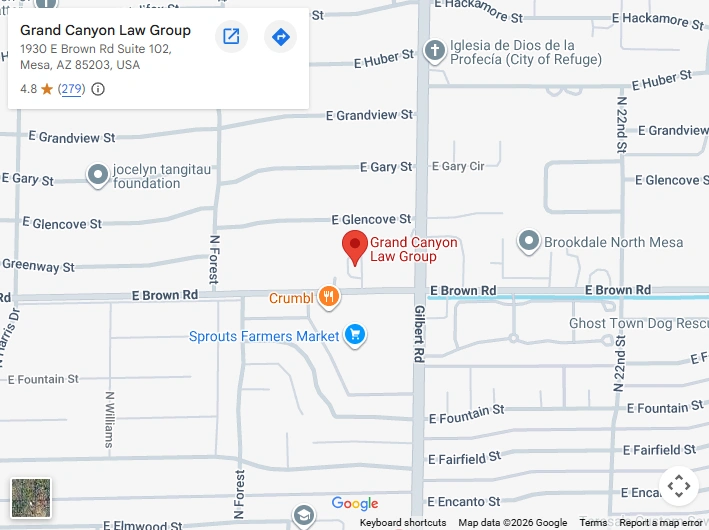
1930 E. Brown Rd
STE 102
Mesa, AZ 85203
Gilbert Office
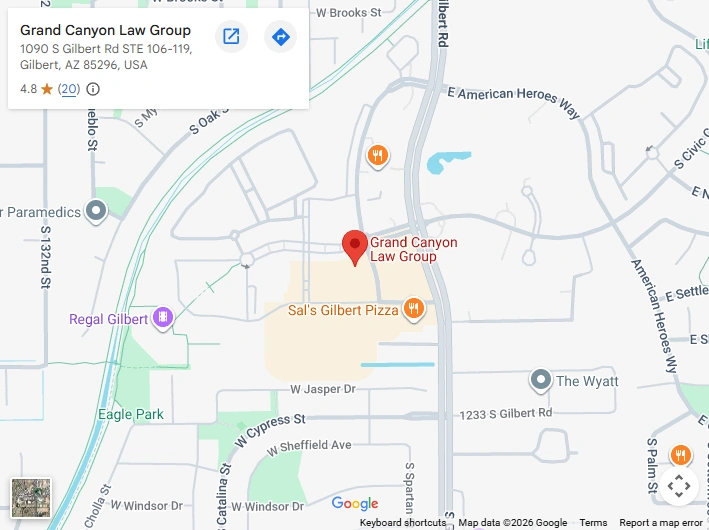
1090 S. Gilbert Rd
STE 106-119
Gilbert, AZ 85296
Tucson Office
© Copyright 2026 Grand Canyon Law Group. All rights reserved.
Digital Marketing By 