Fields Marked With An “*” Are Required

Available 24/7 480-400-5555
Chandler Homicide Lawyer

Homicide Attorney in Chandler, AZ
Homicide is the most harshly prosecuted and punished offense that exists in the criminal justice system. If the State has accused you of taking someone else’s life, you may feel hopeless and overwhelmed by the charges against you. However, it is important to remember that not all is lost. You have rights in this situation, including the right to seek help from an experienced defense attorney. Engage a Chandler homicide lawyer for help.
After such a serious accusation, your first priority should be to contact a Chandler criminal defense lawyer at the Grand Canyon Law Group. Our legal team is made up of former prosecutors who know exactly how these cases are handled. We can put our experience and knowledge to work for you by reviewing your murder or manslaughter charges, assessing your options, and aggressively fighting the charges against you.
CALL A HOMICIDE ATTORNEY BEFORE SPEAKING TO AUTHORITIES
Being under investigation for homicide is an overwhelming experience. The police and prosecutors may appear helpful and suggest that cooperating will benefit you, but do not be fooled into thinking that the authorities are on your side. Talking to the police without an attorney only helps the State build its case.
Anything that a suspect says to the police could be used against them at trial. Those accused should keep quiet and retain dedicated legal counsel as soon as possible. The seasoned homicide attorneys at our Chandler office can be a crucial advocate for an accused individual and protect their rights throughout the criminal investigation.
TYPES OF HOMICIDE CHARGES IN CHANDLER
Homicide is an overarching term to describe when one person takes the life of another person or an unborn child. Within this category, Arizona Revised Statutes §13-1101(2) recognizes the following offenses:
- Negligent homicide
- Manslaughter
- Felony murder
- Second-degree murder
- First-degree murder
Although these offenses differ in the accused’s behavior and intent, they are all felonies with severe penalties upon conviction. In the most extreme cases, the court may sentence the accused to life in prison or impose the death penalty.
Those with prior criminal histories receive harsher homicide penalties than first-time offenders. To protect a person’s life and freedom, it is crucial to secure rigorous representation from a Chandler homicide attorney. The lawyers at our firm will aggressively challenge the State’s case through a variety of tactics to produce a positive outcome for the accused.
WHAT IS NEGLIGENT HOMICIDE?
Negligent homicide involves careless actions that result in another person’s death. The accused may not even have been aware that their behavior posed an unreasonable danger. Ariz. Rev. Stat. § 13-1102 classifies this offense as a Class Four felony. Depending on the facts of the case and the accused’s criminal history, a person convicted of negligent homicide may face a prison sentence of four to 16 years.
WHAT IS MANSLAUGHTER?
Manslaughter is when someone’s reckless behavior causes another person’s death, such as in a fatal car accident, if the driver was impaired. These charges may also be brought if someone killed another person during an argument or altercation in the heat of passion.
According to Arizona’s homicide laws, encouraging or facilitating someone else’s suicide could also constitute manslaughter. Under Ariz. Rev. Stat. § 13-1103, this Class Two felony carries a prison sentence of seven to 35 years, depending on aggravating or mitigating factors and the accused’s criminal history.
MURDER CHARGES IN CHANDLER
The most serious homicide charge, murder, has two subcategories: first-degree and second-degree murder. Each carries harsh penalties and requires a tenacious defense by a knowledgeable homicide attorney to be effectively countered.
DEFINITION OF FIRST-DEGREE MURDER
In a first-degree murder case, the prosecution must prove that the defendant had a premeditated intent to kill the other person. As explained in Ariz. Rev. Stat. § 13-1101(1), the defendant deliberately caused another person’s death, had an opportunity to think about it, and continued to engage in the act.
If the death occurred during another felony crime (e.g., robbery or sexual assault), the prosecution could seek a first-degree murder charge for felony murder. Ariz. Rev. Stat. § 13-1105(D) sets the punishments for this offense as life imprisonment or the death penalty.
DEFINITION OF SECOND-DEGREE MURDER
Second-degree murder also involves the deliberate killing of another person. Essentially, this means that the person understood that their actions would cause severe injury or death. However, second-degree murder does not have an aspect of premeditation. Ariz. Rev. Stat. § 13-1104 identifies second-degree murder as a Class One felony carrying prison terms of ten to 25 years, depending on the circumstances.
WHAT THE STATE MUST PROVE
The burden of proof in criminal cases is on the prosecution, and it’s quite high. To get you convicted of homicide, the prosecutor must prove every element of their case beyond a reasonable doubt. Here’s what that means for each type of charge:
- Negligent homicide. The prosecution must prove causation, death, and criminal negligence.
- Manslaughter. The prosecution must prove causation, death, and your reckless mental state. Manslaughter charges are usually brought following a homicide committed in the heat of passion or with adequate provocation.
- Second-degree murder. The prosecution must prove causation, death, and a knowing or intentional mental state without premeditation.
- First-degree murder. The prosecution must prove causation, death, and premeditation.
Much of what the prosecution must prove hinges on showing your mental state. Arizona recognizes four mental states. Defendants can commit an act:
- Intentionally. You committed the crime on purpose.
- Knowingly. You committed the crime with an awareness of its nature, or you should have been aware of the outcome of your actions.
- Recklessly. You committed the crime while consciously disregarding a substantial and unjustifiable risk.
- Negligently. You committed the crime while unreasonably failing to perceive a substantial and unjustifiable risk.
Your criminal defense lawyer can question any element of the state’s case, including your mental state, in an effort to prove that you were not guilty of committing the stated crime. In some cases, as with mental state, proving that the prosecution is wrong could get your charges reduced.
WHAT TO EXPECT DURING YOUR INVESTIGATION AND TRIAL
The investigation will start as soon as a homicide has been committed. You can expect the police to question you and, if they have just cause, potentially search your home or office for evidence. You should hire a Chandler homicide attorney before speaking with the police. It’s your right to have an attorney present during questioning. Exercise it.
If the police can accumulate enough evidence, they will have you arrested and booked into the Chandler Police Department at 250 East Chicago Street before transferring you to the Sheriff’s Office. You’ll wait there for your initial.
THE INITIAL HEARING
During the initial hearing, the court will explain the charges against you, and the judge will issue a bond. Next, you may attend a preliminary hearing. This hearing allows the judge to hear testimony from witnesses and evaluate evidence provided by the prosecution and defense to determine whether there’s probable cause to believe you committed the crime.
If the judge believes there’s probable cause to move forward, the next step is arraignment. It’s at this point that you’ll enter a plea of guilty, not guilty, or no contest. If you enter a not guilty plea, you’ll receive a date for a pretrial conference or a trial. If you enter a guilty or no contest plea, you’ll receive a date for sentencing.
During the pretrial conference, you’ll get the chance to discuss options for negotiating a plea deal and resolving the charges outside of court. If that’s not possible, your trial will take place at the Maricopa County Superior Courthouse. Both sides will present their cases, and a jury will issue a verdict.
PREPARING FOR AN INITIAL CONSULTATION WITH A LAWYER
The FBI’s crime statistics estimate a 3.0% decrease in national violent crime for 2023 compared to 2022. In 2025, homicide rates were 25% below those in 2019. Despite this, legal support is still crucial for many facing criminal charges. To prepare for an initial consultation with a lawyer, gather all relevant documents, such as police reports, arrest records, and court papers. Create a clear timeline of events and record key details about your case.
It’s also helpful to list any questions or concerns you have. Be honest and upfront with your lawyer, as they need all the facts to build your defense. Finally, make sure to discuss costs, payment plans, and next steps during the meeting.
FAQs
Q: How Much Is a Homicide Lawyer?
A: The cost of hiring a lawyer for a homicide case varies widely. Factors such as the complexity of the case, the lawyer’s experience, and the jurisdiction can influence fees. Generally, homicide cases are among the most expensive due to their seriousness and the resources required. Lawyers may charge hourly rates, flat fees, or retainers, depending on their billing structure. It’s essential to discuss fees upfront and understand the payment terms before proceeding.
Q: Should I Be Honest With My Homicide Defense Lawyer?
A: Yes, you should always be honest with your homicide defense lawyer. They can only help you if they know the full truth. Anything you say is kept private because of the attorney-client privilege. Being open allows them to build a solid defense and avoid any surprises in court. Hiding details can hurt your case or lead to unexpected problems. Your lawyer is there to protect your rights, not to judge you. Trust and honesty are key to working together effectively.
Q: What Is the Legal Definition of Homicide?
A: The legal definition of homicide is the act of one person causing the death of another person. It can be intentional or accidental. Not all homicides are crimes; some may be legally justified, like in self-defense. The law separates homicide into categories, such as murder or manslaughter, based on intent and circumstances. Each type has different legal consequences. Understanding the specific charge is important, as it affects how the case is handled.
Q: How Long Does a Homicide Case Take?
A: A homicide case can take a long time, but the exact timeline depends on several factors. The complexity of the case, the amount of evidence, and whether the case goes to trial can all play a role. Some cases move faster if there’s a plea deal, while others take longer due to investigations or court delays. Each case is different, so there’s no set time. A defense lawyer can give an idea based on the details of your case.
Q: Is It Hard to Get a Homicide Charge Dismissed?
A: Yes, it is generally hard to get a homicide charge dismissed. Homicide is a serious crime, and prosecutors often have strong evidence. However, there are cases where charges may be dismissed if there is a lack of evidence, legal issues, or other factors that weaken the prosecution’s case. Dismissing a homicide charge is difficult, but with the right legal strategy, it may be possible in some situations.
HIRE A HOMICIDE LAWYER
A homicide conviction could lead to a lifelong prison term or even capital punishment. When the stakes are this high, you need to hire a homicide lawyer who can construct an effective murder defense on your side to mitigate the potential consequences.
At Grand Canyon Law Group, our tenacious attorneys have years of experience successfully handling such cases. One of our Chandler homicide lawyers can work tirelessly to protect your rights, freedom, and future through a range of defense strategies. Contact us as soon as possible to begin building your case.

Schedule A Consultation With The Grand Canyon Attorney Who Can Help
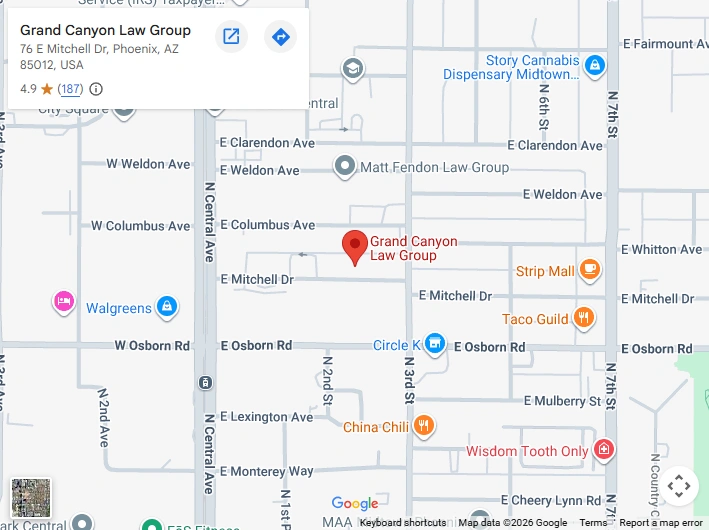
Phoenix Office
76 E Mitchell Drive
Phoenix, AZ 85012
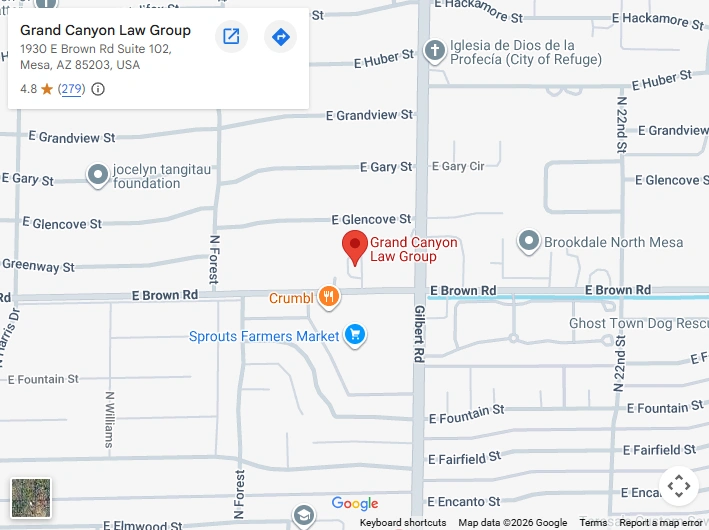
Mesa Office
1930 E. Brown Rd
STE 102
Mesa, AZ 85203
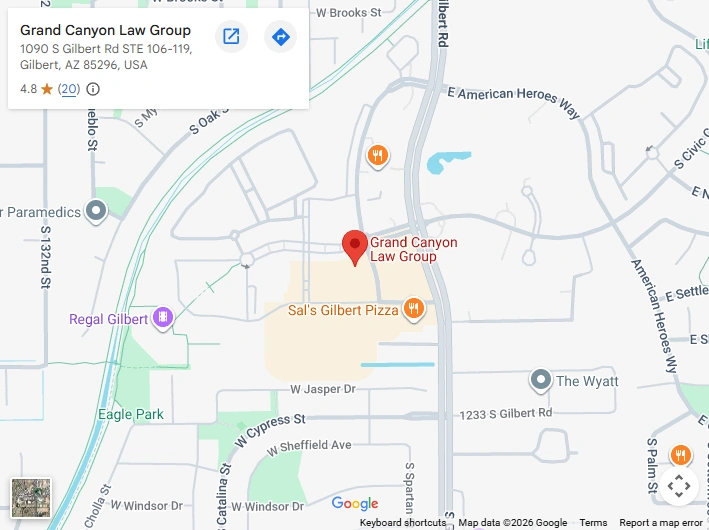
Gilbert Office
1090 S. Gilbert Rd
STE 106-119
Gilbert, AZ 85296
Tucson Office
1 South Church Avenue,
#1200
Tucson, AZ 85701
© Copyright 2026 Grand Canyon Law Group. All rights reserved.
*Images are obtained under license from Canva and other third-party stock image providers, with attribution included where required.